
Scuba Diving for First-Timers: Try Dive or Certification?
Reviewed by the Seeking Adrenaline team · Updated Nov 19, 2026
- Two ways to start: a try dive (often called Try Scuba or Discover Scuba), which is a supervised session with no certification, or an Open Water course, which certifies you to dive on your own with a buddy.
- Trip length: PADI's Discover Scuba Diving takes 2 to 3 hours in all, including a short online lesson. An Open Water course takes several sessions: online learning, pool sessions and open water dives.
- Price: prices vary by shop, so check with the operator when you book. Specialty trips, like a shark cage dive, cost much more than a try dive.
- Best season: pool classes don't depend on the weather. Ocean diving depends on the region and the season, so check with the operator.
- Who it's for: PADI's Discover Scuba Diving is for anyone 10 or older. Most programs ask about your health first.
What breathing underwater feels like
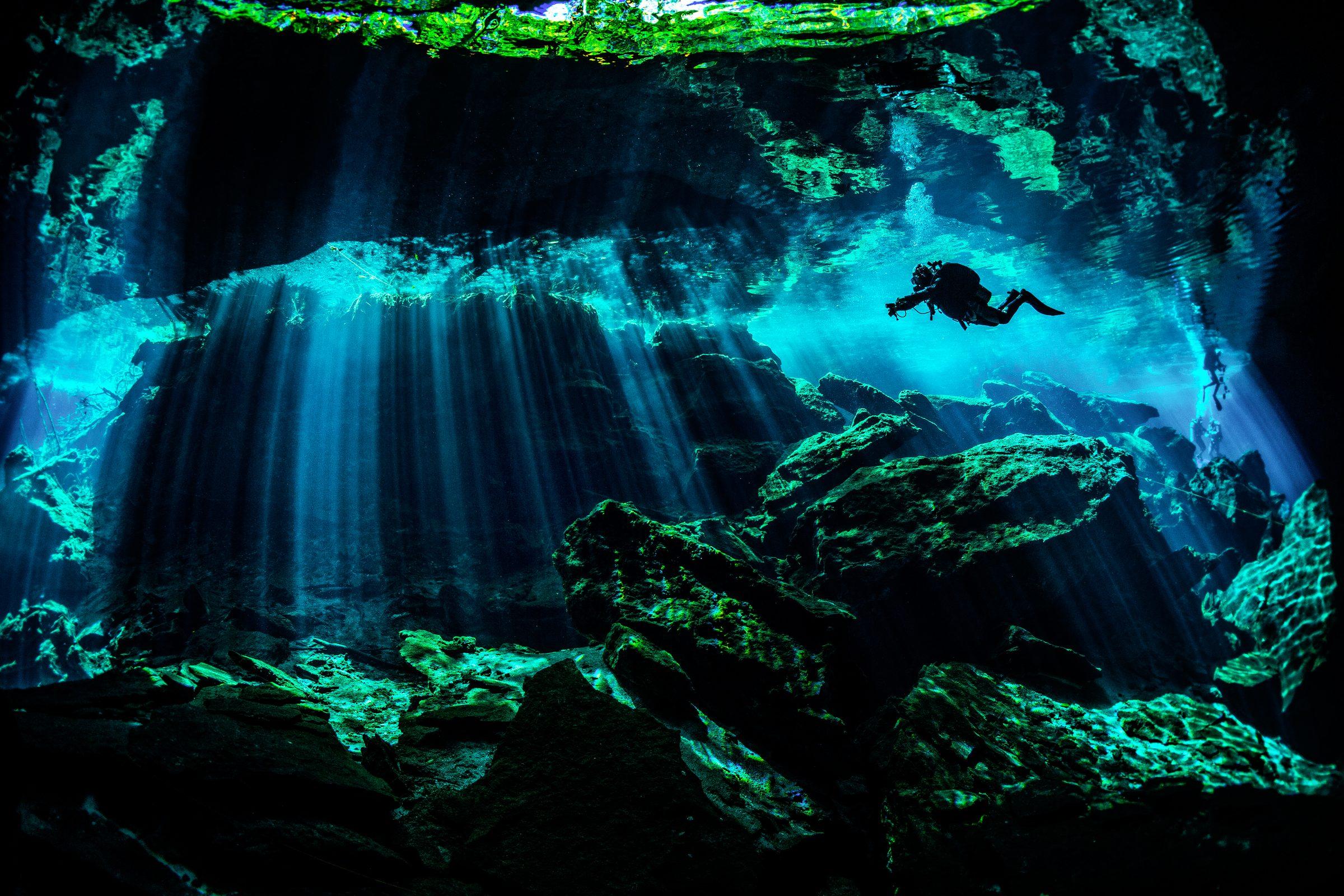
Your first breath underwater feels strange. You put the regulator in your mouth, breathe in slowly and air arrives, even though your face is under the surface. After a few breaths, most people relax. The sound of your own breathing becomes the main thing you hear.
A try dive starts in a pool or in shallow, calm water with an instructor right next to you. You learn to clear water from your mask, equalize the pressure in your ears and control your breathing. Then you swim around and get used to the feeling of floating weightless. If you enjoy it, the next step is a certification course.
A try dive goes by several names: Discover Scuba Diving at PADI shops, Try Scuba at some others. PADI's version is a one-day experience for anyone 10 or older and takes 2 to 3 hours in all, including a short online lesson (blog.padi.com). It isn't a certification, but what you learn can count toward an Open Water course later (blog.padi.com). If the try dive includes the optional open water dive, it stays at 40 feet (12 m) or shallower (blog.padi.com).
Your first time
Most first dives follow the same pattern:
- Paperwork. You fill out a diver medical questionnaire. If you answer yes to certain questions, you need a doctor's sign-off before you dive (uhms.org).
- Briefing. The instructor explains the gear and hand signals.
- Shallow water skills. In a pool or calm shallows, you practice breathing from the regulator, clearing water from your mask and equalizing your ears.
- The swim. Once you're comfortable, you swim around with the instructor beside you.
Is it hard? The basics are learned in one session. The two things that take practice are breathing slowly and calmly and equalizing your ears as you go down. Never hold your breath while breathing from scuba; breathe normally the whole time.
Flying home after? Plan ahead. Divers Alert Network recommends waiting at least 12 hours after a single dive and at least 18 hours after multiple dives in a day or several days of diving before you fly (dan.org).
For the Gulf coast, see Scuba diving in Destin.
What it costs
Exact prices come from the operator. They vary by shop and by what's included, so ask when you book.
Specialty trips, like a shark cage dive, cost much more than a try dive.
What moves the price: private vs. group lessons, whether a boat trip is included, gear rental, and the online learning fee. Once you're certified, many divers also buy their own mask, fins and boots.
Try dive or certification?
- A try dive is a one-time experience with an instructor beside you. It doesn't certify you, but it tells you whether you like scuba. See What breathing underwater feels like.
- Open Water certification takes several sessions and open water dives. Once certified, you can rent gear and dive with a buddy.
What to wear
For a pool session, bring a swimsuit and ask the shop what gear it provides. For open water, the shop will tell you what exposure suit you need for the water temperature.
Who it's right for
Scuba suits curious people who are comfortable in the water and want to see what's below the surface. You don't need to be an athlete, but you do need to be in reasonable health.
Age. Kids can start earlier than most parents expect:
| Age | What they can do |
|---|---|
| 8 and up | PADI Bubblemaker: a pool session no deeper than 6 feet (2 m). |
| 10 and up | A try dive, or the Junior Open Water course. Ages 10 and 11 must dive with a PADI pro or a certified parent or guardian, no deeper than 40 feet (12 m). |
| 12 to 14 | Junior Open Water divers must dive with a certified adult, no deeper than 60 feet (18 m). |
| 15 and up | Junior certification converts to a standard Open Water card. |
Age rules from PADI (blog.padi.com). Other agencies are similar, and each shop sets its own rules, so check before you book.
Health. Every program asks health questions first. Some answers, such as certain heart, lung or ear conditions, mean you need a doctor's approval before you dive (uhms.org). If you are pregnant or trying to become pregnant, don't dive (uhms.org, dan.org).
Not the right fit if...
You're uneasy in water or have health concerns your doctor hasn't cleared. Snorkeling is a simpler way to start; see Scuba vs snorkeling. If sharks are your main interest, compare Cage dive vs scuba with sharks.
Scuba vs snorkeling vs freediving
| Snorkeling | Scuba | Freediving | |
|---|---|---|---|
| How you breathe | Through a snorkel at the surface | From a tank, underwater | You hold your breath |
| Where you are | At or near the surface | Down to 40 ft on a try dive; deeper once certified | As deep as your training and breath-hold allow |
| Training | None | Try dive (no card) or Open Water course | Freediver course recommended; PADI's starts at age 12 (blog.padi.com) |
| Gear | Mask, snorkel, fins | Full scuba kit (usually rented) | Mask, snorkel, long fins, weights |
| Best for | Easy first look at a reef | Spending time down with the fish | Quiet, gear-light dives for confident swimmers |
If you're uneasy in the water, start with snorkeling. If you want to stay down and explore, try scuba.
Where and when to go
Pools: any time. Pool classes don't depend on the weather.
Florida Keys. At Key West, average water temperature runs from about 69°F in January to 87°F in July and August (NOAA coastal water temperature guide, archived). Atlantic hurricane season runs June through November, so keep plans flexible then. See Key West.
Gulf coast. For diving along the Gulf, see Destin.
California. Catalina Island's Casino Dive Park is a classic first ocean dive. The water is cooler than Florida's, so ask the shop what wetsuit you need.
FAQ
Do I need to be certified to try scuba?
No. A try dive is supervised by an instructor and needs no certification. PADI's Discover Scuba Diving takes 2 to 3 hours in all.
How old do you have to be to scuba dive?
It depends on the program. PADI's Discover Scuba Diving is for ages 10 and up, and its Bubblemaker pool session starts at age 8.
Is scuba diving hard?
The basics are learned in a single session, and the instructor stays close. Breathing calmly and equalizing your ears take a little practice. See Your first time.
How long does Open Water certification take?
It combines online learning, pool sessions and open water dives, spread over several sessions. Ask the shop for its schedule.
What does scuba diving feel like?
Calm and weightless once you relax. See What breathing underwater feels like and Your first time.
Where to find scuba companies
Seeking Adrenaline has 163 scuba companies in 29 states. They are in alphabetical order, and the number is how many companies we have there. Search a city or ZIP at the top of the page to see them.
- Alabama (2)
- Arkansas (4)
- California (18)
- Connecticut (2)
- Florida (76)
- Hawaii (14)
- Indiana (2)
- Kansas (3)
- Kentucky (2)
- Louisiana (5)
- Maryland (1)
- Michigan (3)
- Minnesota (1)
- Mississippi (1)
- Nebraska (1)
- Nevada (1)
- New Jersey (3)
- New Mexico (1)
- New York (2)
- North Carolina (4)
- Oklahoma (5)
- Oregon (1)
- Pennsylvania (1)
- South Carolina (2)
- South Dakota (1)
- Texas (3)
- Washington (2)
- West Virginia (1)
- Wyoming (1)
Related activities
Sources
- PADI: Discover Scuba Diving vs. Open Water Diver blog.padi.com
- PADI: try dive vs. Discover Scuba Diving blog.padi.com
- DAN: flying after diving dan.org
- PADI blog: kids' scuba courses by age blog.padi.com
- PADI: Discover Scuba Diving FAQs blog.padi.com
- Diver Medical Participant Questionnaire (2026 edition, via UHMS) mail.uhms.org
- DAN: pregnancy and diving dan.org
- NOAA NODC coastal water temperature guide, Key West (archived) webarchive.library.unt.edu
About the Seeking Adrenaline team
Our guides are drafted with help from automated tools, then reviewed by the Seeking Adrenaline team.
